

Herbal vs chemical bleach, the short answer: every cream bleach, herbal or chemical, lightens facial hair and tan the same basic way: an activator releases oxygen that lightens melanin on the skin’s surface. The real difference is what else is in the cream and how strong the mix is. A good herbal bleach pairs a controlled activator with soothing, moisturising ingredients such as liquorice, saffron, vitamin E and glycerin, and leaves out parabens and sulfates. That makes it gentler for most Indian skin, but not risk-free. You still need a patch test.
This guide explains how bleach works, what “chemical” and “herbal” really mean on a label, which type suits your skin, and how to bleach safely at home.

In this guide:
- How bleach cream works
- What chemical bleach means
- What makes a bleach herbal
- Herbal vs chemical bleach: 8 differences
- How to check a bleach label
- Which bleach suits your skin
- How to bleach safely at home
- The verdict
- FAQs
How Bleach Cream Actually Works
Bleach cream comes in two parts: the cream and an activator powder. When you mix them, the activator starts an oxidation reaction. Oxygen is released and temporarily lightens the pigment (melanin) in fine facial hair and the top layer of skin. Dark hair blends in with your skin, and surface tan looks lighter.
Two points matter here:
- It is temporary. Bleach does not change your natural skin tone. Your skin renews itself, and results usually fade in 3 to 4 weeks.
- The activator does the lightening in every bleach. “Herbal” does not mean the reaction is missing. It means the formula around the reaction is gentler and more caring for skin.
What “Chemical Bleach” Usually Means
When people say “chemical bleach”, they usually mean conventional bleach creams that focus only on fast lightening. Many of them share these traits:
- A strong activator mix that works fast but can sting, burn or leave red patches, especially on thin or sensitive skin.
- A strong ammonia-like smell during application.
- Few or no skin-caring ingredients, so skin can feel tight and dry afterwards.
- Preservatives and foaming agents such as parabens or sulfates in some formulas.
These products are not “bad” by default. Many people use them without problems. But if your skin turns red, itchy or patchy after a parlour bleach, the formula was probably too harsh for you.
What Makes a Bleach “Herbal”
A herbal bleach keeps the oxygen-release reaction but builds the cream around plant ingredients that calm, moisturise and support brightening. Common ones include:
- Liquorice (Mulethi): widely used in skincare to soothe skin and help even out tone.
- Saffron (Kesar): a traditional Ayurvedic ingredient used for a brighter, more radiant look.
- Vitamin E: an antioxidant that helps protect and soften skin.
- Glycerin: draws moisture into the skin, so it doesn’t feel tight after bleaching.
- Fruit extracts such as orange peel or apple: popular in fruit bleaches for a fresh glow.
What “herbal” does not mean: it is not 100% plant-based (the activator is still a cosmetic chemical), and it is not automatically safe for everyone. Treat every bleach with the same care.
Herbal vs Chemical Bleach: 8 Key Differences
Here is how herbal vs chemical bleach compare on the eight points that matter most for your skin:
| Feature | Typical chemical bleach | Good herbal bleach |
|---|---|---|
| How it lightens | Oxygen release from activator | Oxygen release from activator |
| Strength | Often strong and fast | Controlled, gentler mix |
| Skin-caring ingredients | Few or none | Liquorice, saffron, vitamin E, glycerin |
| Feel after rinsing | Can be tight or dry | Softer, more hydrated |
| Redness or stinging | More common | Less common (patch test still needed) |
| Parabens and sulfates | Sometimes present | Usually avoided |
| Smell | Strong, ammonia-like | Milder, herbal fragrance |
| Best for | Normal, tolerant skin | Most skin types, including first-time users |
How to Check a Bleach Label Before You Buy
Whichever side of the herbal vs chemical bleach choice you pick, check these six things on the pack:
- Ingredient list: look for soothing ingredients (liquorice, aloe vera, vitamin E, glycerin) near the top.
- Paraben-free and sulfate-free: helpful if your skin is dry or reactive.
- Activator included: the pack should include a measured activator and clear mixing instructions.
- Mixing ratio and time: clear directions (for example 1 part activator to 4 parts cream, 10 to 15 minutes) mean you’re less likely to over-process.
- Batch number and expiry date: never use an expired bleach. Old activator can react unpredictably.
- Manufacturer details: a full address and customer care contact are signs of a responsible brand.
Which Bleach Is Right for Your Skin?
Sensitive skin
Choose a herbal formula with liquorice or aloe, and always do a patch test 24 hours before. Keep the time at the lower end (about 10 minutes). If you have eczema, rosacea or very reactive skin, ask a dermatologist before bleaching at all. The American Academy of Dermatology also notes that products labelled “natural” can still cause skin reactions, which is why testing a product before use matters.
Dry skin
Look for glycerin and vitamin E in the formula, and apply a light moisturiser or aloe vera gel afterwards.
Oily or acne-prone skin
Never bleach over active pimples or inflamed acne. Wait until breakouts heal. A gentle herbal bleach is better than a harsh one, because irritation can trigger more breakouts.
Men
Bleach works on men’s skin too, mostly for lightening facial hair on the cheeks and upper face and for tan on the neck. Don’t bleach freshly shaved skin. Wait at least a day.
Before a wedding or festival
Bleach 2 to 3 days before the event, not on the day, so any slight pinkness settles first. Never try a new bleach for the first time just before a big occasion. See our full bridal bleach guide for a 30-day plan.
How to Bleach Safely at Home (7 Steps)
- Patch test: apply a little mixed bleach on your inner arm or behind the ear and wait 24 hours.
- Clean and dry: wash your face with plain water and pat it completely dry.
- Mix: in a non-metal bowl, mix the activator and cream in the ratio on the pack (usually 1:4) until smooth.
- Apply: spread an even layer with a spatula. Avoid eyebrows, eyelids and the under-eye area.
- Time it: leave it on for 10 to 15 minutes. Never go beyond 20 minutes. Longer does not mean better results.
- Rinse: wash off with plain water and wipe gently with a damp cotton pad.
- Aftercare: no soap, scrub or face wash for at least 6 hours, and avoid strong sun for the rest of the day. A cooling aloe vera gel helps calm the skin.
If you feel strong burning at any point, rinse it off immediately with cool water.
Bleach Myths, Busted
- “Bleach permanently lightens skin.” No. It works on surface melanin and facial hair. Results fade in 3 to 4 weeks.
- “Leaving it on longer gives better results.” No. It only raises the risk of irritation.
- “Herbal bleach has no chemicals.” No. It still uses an activator. It is gentler because of what surrounds that activator.
- “Bleach removes facial hair.” No. It lightens hair so it blends in. To remove hair, see our hair removal cream vs waxing guide.
The Verdict: Herbal vs Chemical Bleach
Both types lighten facial hair and tan the same way, so the herbal vs chemical bleach choice is really about comfort and skin care. If your skin is sensitive, dry or new to bleaching, or if a parlour bleach has ever left you red and itchy, a good herbal bleach is the safer place to start. If your skin is tolerant and you only care about speed, a conventional bleach can work too. Whichever you pick, patch test first, follow the timing, and bleach no more than once every 3 to 4 weeks.
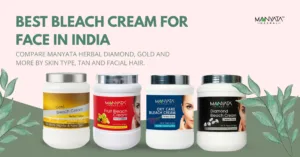
Manyata Herbal Bleach Creams
All Manyata Herbal bleach creams come with their own activator and are made with herbal ingredients for a gentler bleach:
- Oxy Care Bleach Cream: saffron, liquorice and vitamin E, our pick for tan and uneven tone.
- Diamond Bleach Cream: for an instant glow before events. Also in a 250g home pack.
- Gold Bleach Cream: for dull, tired-looking skin.
- Fruit Bleach Cream: apple and orange extracts for a fresh everyday glow.
Not sure which one to choose? Read our full comparison: Best Bleach Cream for Face in India, or browse all herbal bleach creams. For aftercare, try our Aloe Vera Face Massage Gel.
Frequently Asked Questions
Is herbal bleach better than chemical bleach?
For most people, yes. Both lighten facial hair and tan through the same oxygen-release reaction, but a good herbal bleach adds soothing and moisturising ingredients and avoids parabens and sulfates, so it is usually gentler. It is not risk-free, so always do a patch test.
Does herbal bleach contain chemicals?
Yes. Every cream bleach needs an activator to release oxygen, and that activator is a cosmetic chemical. Herbal bleach is gentler because of the plant ingredients and the controlled mix around that activator.
Is herbal bleach safe for sensitive skin?
It is usually a safer choice than a harsh bleach, but sensitive skin can still react. Do a patch test 24 hours before, keep it on for about 10 minutes, and ask a dermatologist first if you have eczema, rosacea or very reactive skin.
How often can I bleach my face?
No more than once every 3 to 4 weeks. Bleaching more often does not improve results and can irritate your skin.
Does bleach permanently lighten skin?
No. Bleach only lightens facial hair and the surface layer of skin. Your natural skin tone returns as the skin renews itself, usually within 3 to 4 weeks.
Can men use herbal bleach cream?
Yes. Men use it to lighten facial hair on the cheeks and upper face and to reduce tan on the neck. Do not apply it on freshly shaved skin.





3 comments
Pingback:
Best Bleach Cream for Face in India: Manyata Herbal GuidePingback:
Bridal Bleach Guide: 30-Day Plan Before Your WeddingPingback:
Skincare Routine for Tan Removal: 5-Step Daily Plan