
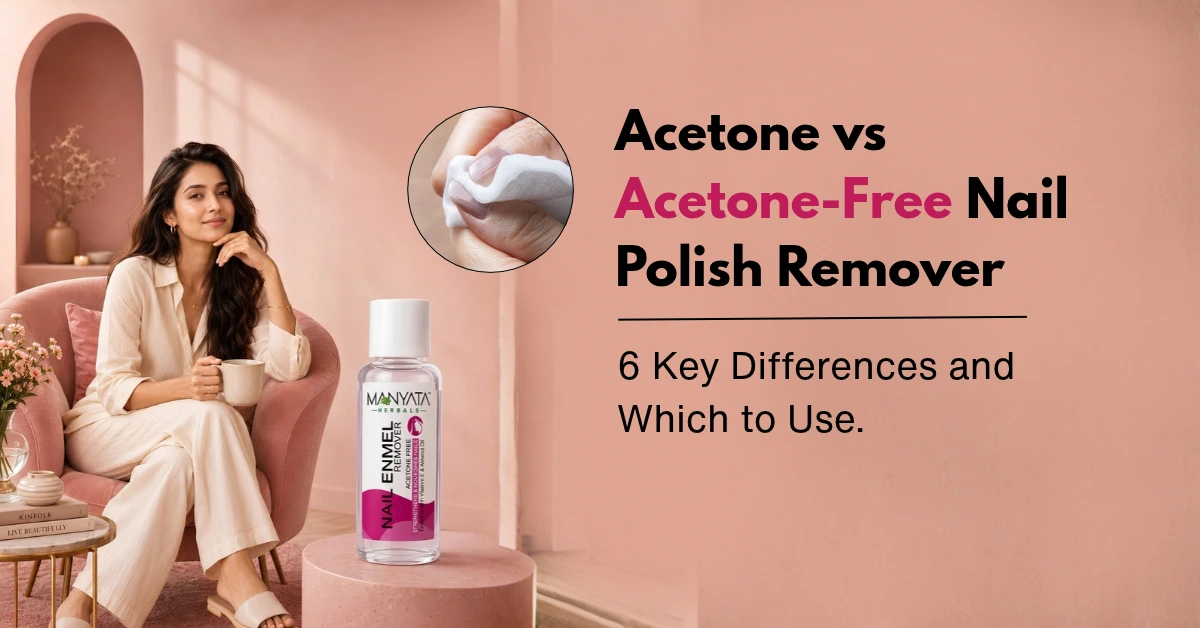
Acetone-free nail polish remover, the short answer: for regular nail polish, an acetone-free remover is the better everyday choice. It removes polish more gently and leaves nails and cuticles less dry, white and brittle. Acetone removes polish faster and is still needed for gel or soak-off polish, but it is harsh if you use it often. If your nails peel, split or feel dry, switching to acetone-free is one of the easiest fixes.
Below, we compare the two side by side, explain when each makes sense, and show how to remove polish without damaging your nails.

In this guide:
- What acetone and acetone-free removers are
- 6 key differences
- When to use which
- How to remove polish gently
- Signs acetone is hurting your nails
- Safety tips
- What to look for on the label
- FAQs
What Acetone and Acetone-Free Removers Are
Acetone is a strong, fast solvent. It breaks down nail polish in seconds, but it also dissolves the natural oils in your nails and the skin around them. That’s why nails often look chalky white and feel dry after an acetone wipe.
An acetone-free nail polish remover uses milder solvents, most often ethyl acetate, usually with conditioning ingredients added. It takes a few seconds longer to lift polish, but it is much kinder to the nail plate and cuticles.
Acetone vs Acetone-Free Nail Polish Remover: 6 Key Differences
| Point | Acetone remover | Acetone-free remover |
|---|---|---|
| Speed | Very fast | A little slower; press, don’t rub |
| Effect on nails | Dries nails; can cause peeling and splitting with frequent use | Gentler; less drying |
| Effect on cuticles and skin | Leaves skin white, tight and dry | Less drying, especially with conditioners |
| Smell | Sharp and strong | Milder |
| Glitter and dark shades | Removes easily | Works, but needs a longer press |
| Gel or soak-off polish | Needed to remove it | Usually not strong enough |
Health sources agree on the main point: Mayo Clinic advises limiting nail polish remover and choosing one without acetone to keep nails healthy.
When to Use Which
- Regular nail polish, changed every week or two: use an acetone-free nail polish remover. This is most people.
- Dry, thin, peeling or brittle nails: avoid acetone completely.
- Heavy glitter: acetone-free still works. Press a soaked cotton pad on the nail for 20 to 30 seconds before wiping.
- Gel or soak-off polish: this needs acetone. Soak only the nails, not the whole fingers, and moisturise well afterwards, or get it removed at a salon.
- Children and teens: an acetone-free remover is the gentler choice, used with an adult’s help and in a ventilated room.
How to Remove Nail Polish Without Damaging Your Nails
- Soak a cotton pad well with remover. Use one pad for every 2 nails so you’re not smearing colour around.
- Press and hold the pad on the nail for 5 to 10 seconds (longer for dark or glitter shades). Let the remover do the work.
- Wipe in one stroke from the base to the tip. Don’t scrub back and forth.
- Clean the edges with a cotton bud dipped in remover.
- Wash your hands with mild soap and water to remove any leftover solvent.
- Moisturise: rub a drop of oil or hand cream into your nails and cuticles.
- Give nails a break: leave them bare for a day or two every few weeks.
Signs Acetone Is Hurting Your Nails
- White, chalky patches on the nail after removing polish
- Peeling layers at the tips
- Nails that split or break easily
- Dry, cracked or rough cuticles
- Skin around the nails that stings or turns red
If you notice these, switch to an acetone-free nail polish remover and moisturise your nails daily. If nails change colour or shape, swell, hurt or stop growing, see a doctor, as that can signal something other than dryness.
Safety Tips for Any Nail Polish Remover
Acetone and acetone-free removers are both solvents, so a few basic precautions apply to every bottle:
- Keep it away from flames and heat. Most removers are flammable. Don’t use them near a gas stove, candle or while smoking.
- Use it in a ventilated room. Open a window so the fumes don’t build up, especially in a small bathroom.
- Keep it away from eyes and mouth. If it gets in your eyes, rinse with plenty of clean water.
- Close the cap tightly. Removers evaporate quickly and lose strength if left open.
- Store it out of children’s reach, in a cool place away from sunlight.
- Don’t use it on broken skin or around cuts and hangnails, where it will sting.
An acetone-free nail polish remover won’t remove these risks completely, but it is much gentler on your nails and skin.
What to Look for on the Label
- “Acetone-free” clearly written on the pack.
- Conditioning ingredients such as vitamin E, pro-vitamin B5 (panthenol), lanolin or plant oils.
- A mild smell rather than a sharp chemical one.
- A full ingredient list, batch number, expiry date and manufacturer details.
Manyata Nail Enamel Remover is acetone-free and made with conditioning ingredients such as pro-vitamin B5 and lanolin, in a handy 30ml bottle. Pair it with our herbal nail paints for a complete gentle nail routine.
The Verdict
For everyday nail polish, choose an acetone-free nail polish remover. It removes polish well with a little patience and keeps your nails stronger and less dry. Keep acetone only for gel polish, and moisturise after every removal. Your nails will look healthier within a few weeks.
Frequently Asked Questions
Is acetone-free nail polish remover better?
For regular nail polish, yes. It removes polish more gently and is less drying for nails and cuticles. Acetone is faster and needed for gel polish, but frequent use can make nails dry and brittle.
Does acetone-free remover remove nail polish completely?
Yes, for regular polish. Press a well-soaked cotton pad on the nail for a few seconds before wiping. Dark and glitter shades need a little longer.
Can acetone-free remover remove gel nail polish?
Usually not. Gel and soak-off polish need acetone. Soak only the nails, then moisturise well, or have gel polish removed at a salon.
Why do my nails turn white after removing polish?
White, chalky patches are usually a sign the nail has dried out, often from acetone. They fade as the nail rehydrates. Switch to an acetone-free remover and moisturise your nails.
How often should I remove nail polish?
Try not to remove and reapply polish more than once every 1 to 2 weeks, and give your nails a polish-free break now and then.
Is acetone-free nail polish remover safe for children?
It is gentler than acetone, but it is still a solvent. Adults should help, use it in a ventilated room, keep it away from the eyes and mouth, and store it out of children’s reach.


Add comment